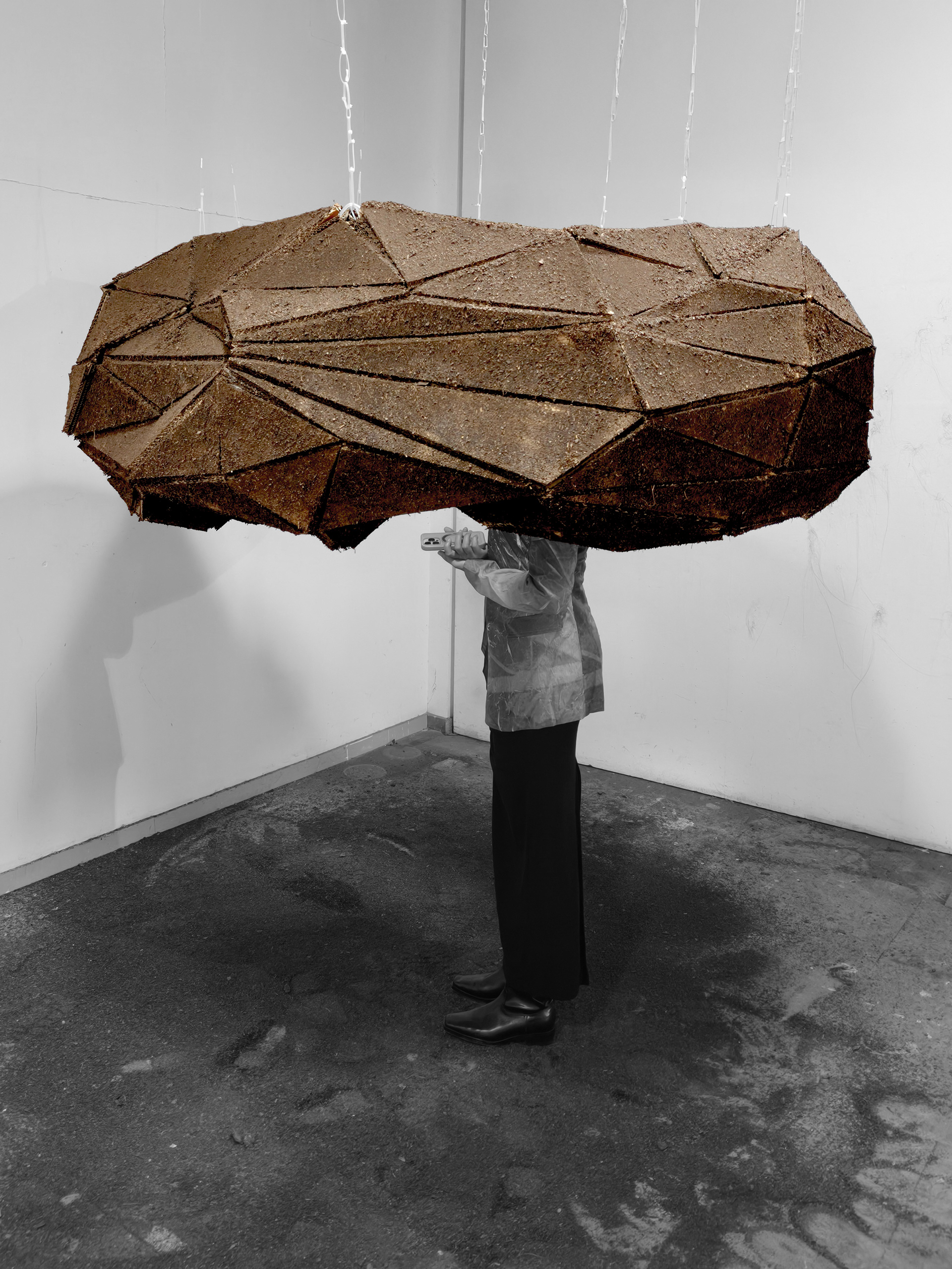
1.9 x 1.9 m
Cardboard, glue, tape, cable ties, binder clips, coconut coir and soil.
Cardboard, glue, tape, cable ties, binder clips, coconut coir and soil.
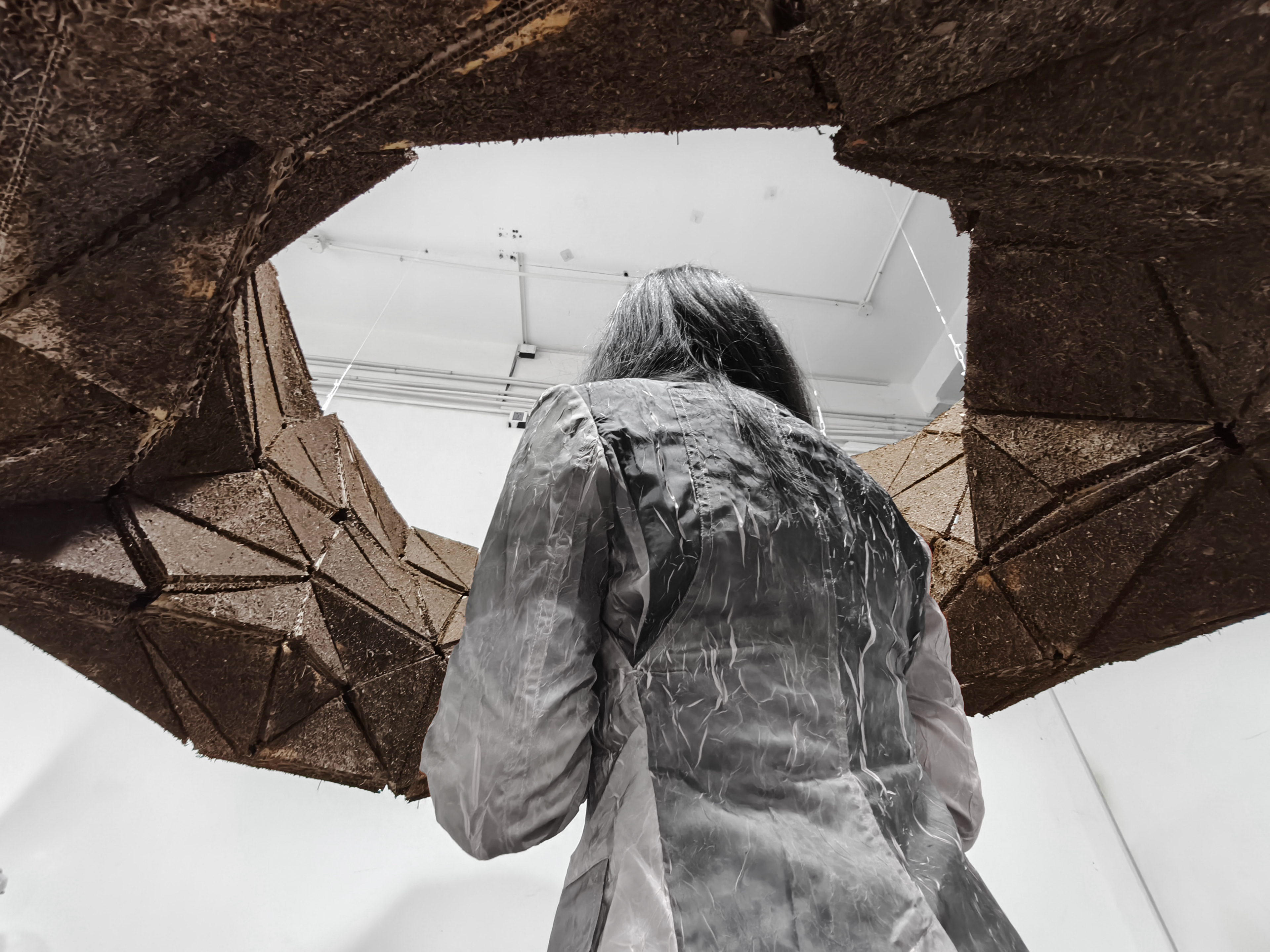
Ouroboros is the name of a mythological creature found in many cultures, especially in ancient Egypt and Greece. It’s typically depicted as a snake (or sometimes a dragon) eating its own tail. This creature symbolizes infinity and the endless cycles of nature, like the rotation of crops or the rhythm of life and death.
This installation uses this concept of a loop, a repeating cycle, to express how human interaction changes Earth, and how Earth, in turn, transforms us too in an ongoing exchange.
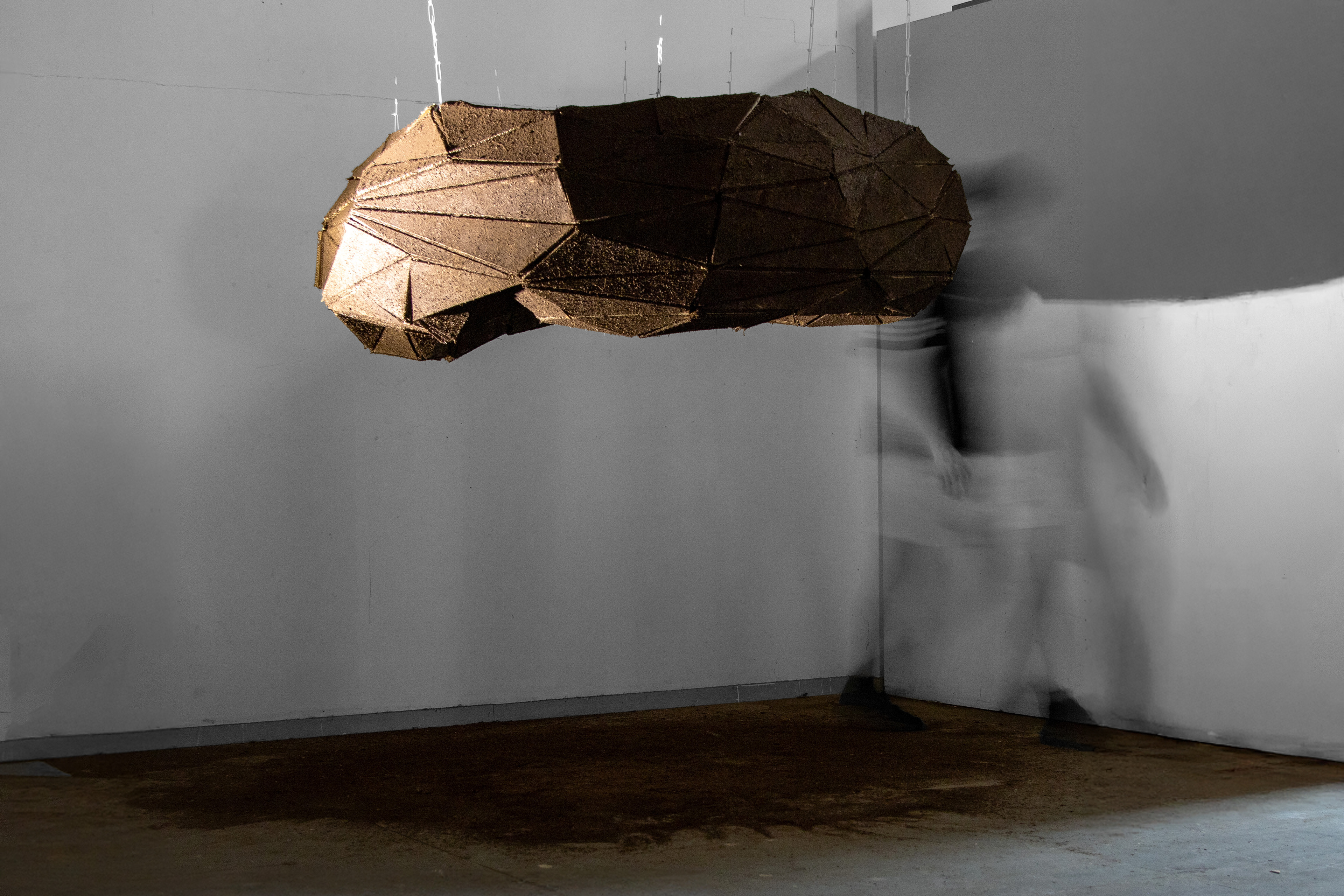
It was created combining computer-aided design and fabrication (parametric design tools, CNC…) with the most “natural” material possible: soil, raw matter that could potentially bear life. This contrast tries to explore the dynamics between humans and nature, while subverting expectations: seeing “dirt” suspended nearly two meters above the ground in a geometrical pattern disrupts our expectations and makes us question the means and consequences of the changes we impose on the planet.
At the same time, just as every human leaves a trace on Earth simply by existing, viewers who step into the installation drawn by curiosity will they inevitably leave their mark on the soil beneath their feet, turning the installation into a collaborative work.